What is Oku-Kuji Tea — and Why It's One of Japan's Best Kept Secrets
TL;DR: Oku-Kuji tea is a rare, centuries-old Japanese green tea grown in the mountains of northern Ibaraki Prefecture — one of the northernmost commercial tea-growing regions in the world. Almost unknown outside Japan, it produces a bold, deeply rich flavour unlike anything found in Kyoto or Shizuoka. You can even hand-roll it yourself on a guided tour.
What is Oku-Kuji Tea?
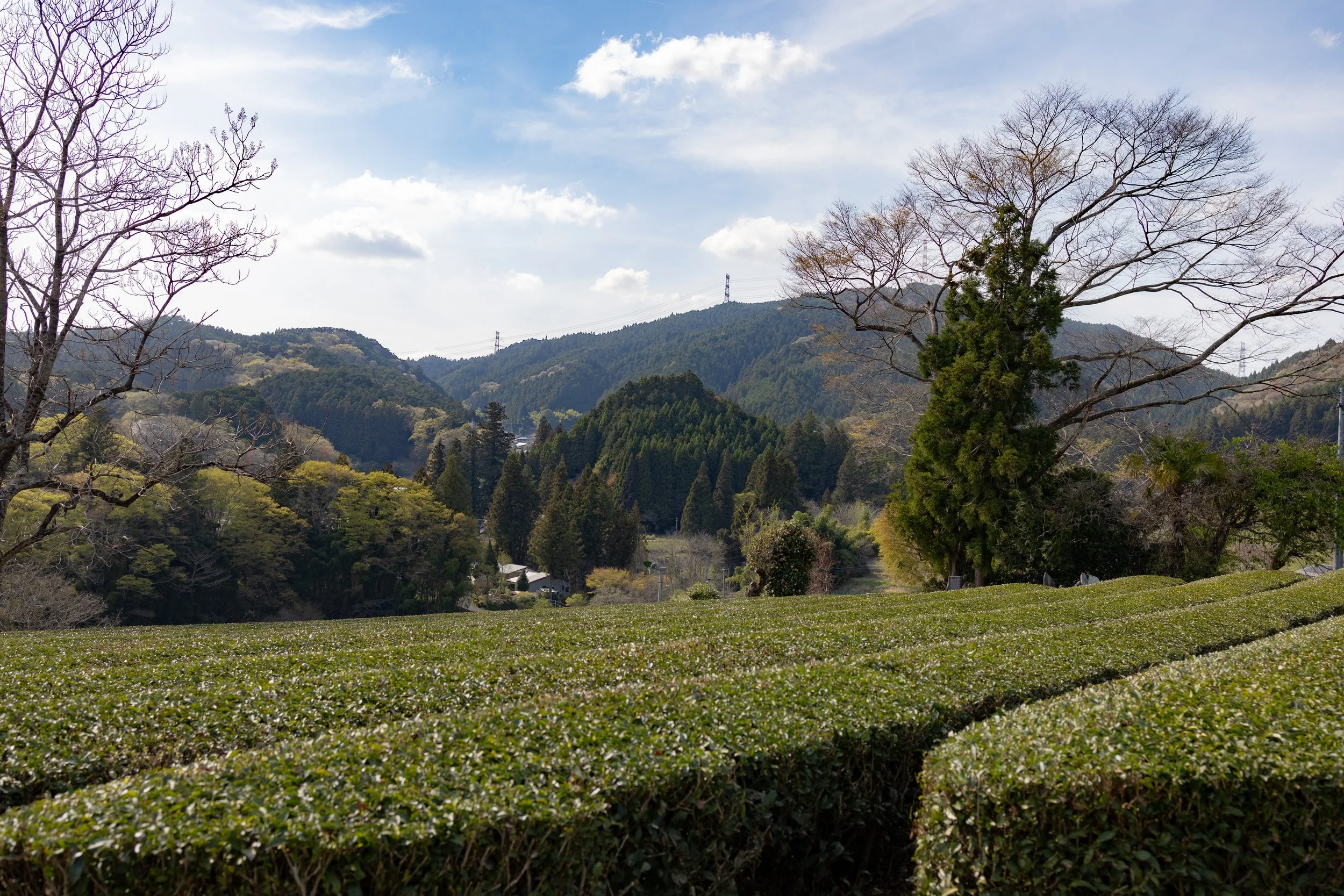
Tea fields of Oku-Kuji Tea
If you've visited Japan and tried green tea, chances are it came from Shizuoka or Uji in Kyoto — the two regions most tourists know. But deep in the mountains of northern Ibaraki Prefecture, a far lesser-known tea has been quietly growing for over 500 years.
It's called Oku-Kuji tea (奥久慈茶), and almost no one outside Japan has heard of it.
Grown in and around Daigo Town (大子町) in the Oku-Kuji region, this tea holds a remarkable distinction: it is produced at one of the northernmost commercial tea-growing locations in Japan. Most people assume tea only grows in warm southern climates. Oku-Kuji proves otherwise — and the cold is precisely what makes it special.
Why Does Growing Tea in the Cold Make It Better?
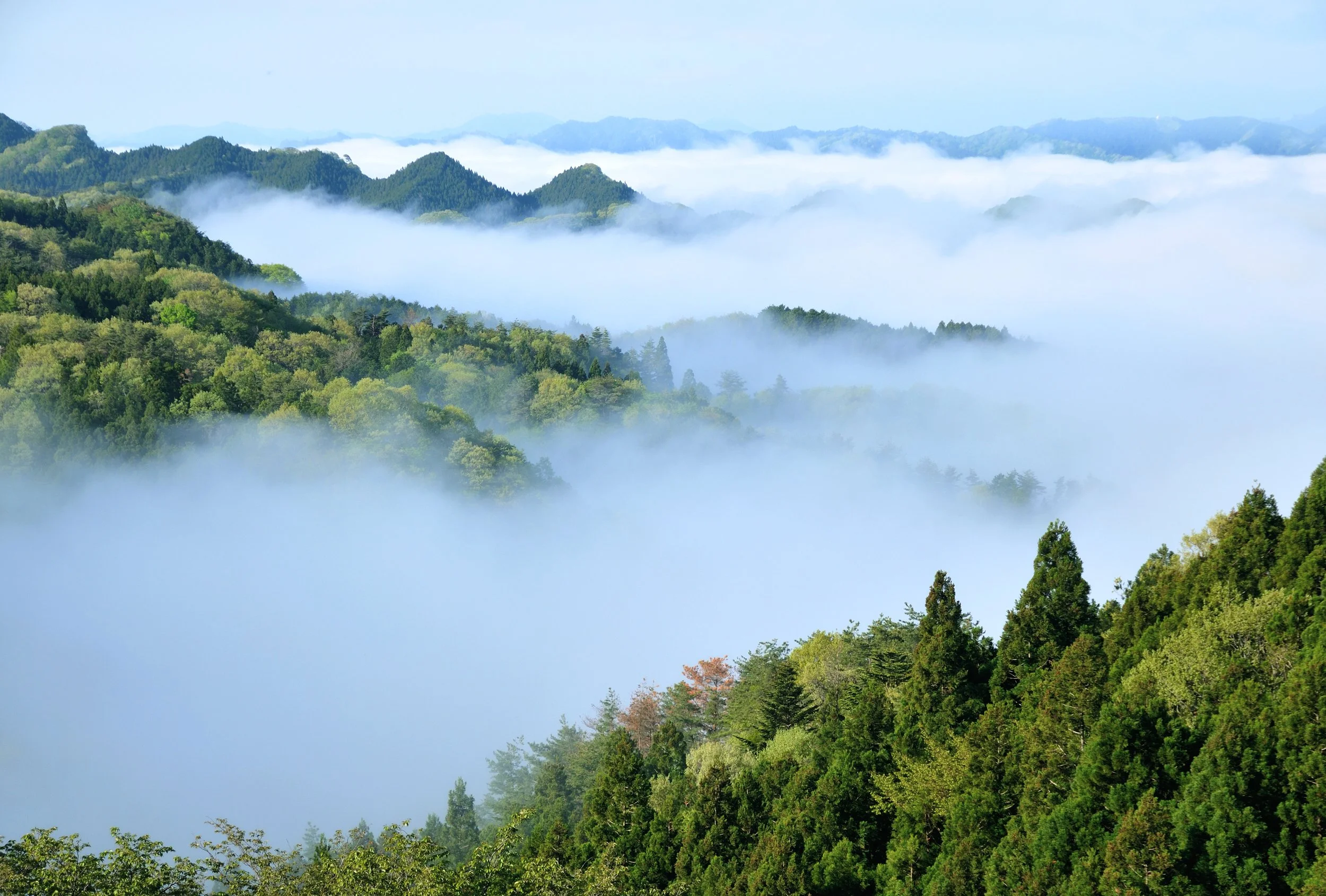
Daigo Town sits in a landlocked mountain basin — the highest elevation area in Ibaraki Prefecture — surrounded on all sides by hills. Cold air flows down from the mountain slopes each night, creating dramatic temperature swings within a single day. In mid-April, it is not unusual to experience a temperature difference of 20 degrees Celsius between dawn and afternoon. Mornings can drop below freezing, leaving the tea fields blanketed in white frost, while afternoons are mild enough for a light jacket. Snow and frost are the natural enemy of tea plants — and yet the farmers here have learned to work with this unforgiving climate for centuries.
The Kujigawa River flows through the valley below, and cool morning mist drifts softly across the hillsides each day. This combination — bitter cold nights, sharp daily temperature swings, mountain mist, and the sandy soils of the Yamizo mountain range — forces the tea plants to grow slowly and develop thick, dense leaves packed with flavour. The result is a tea that is bolder, richer, and more complex than teas grown in milder southern climates.
Oku-Kuji tea is known for its deep colour, strong aroma, and a satisfying combination of astringency and umami richness. It holds its flavour well into a second and even third brew — something many teas from warmer regions cannot do.
A History That Stretches Back 500 Years
Oku-Kuji tea's story begins in the late Muromachi period — around the 15th or 16th century. According to local accounts, three Buddhist monks from Saikan Saifukuji Temple in the northern part of the region travelled to Uji in Kyoto, the most celebrated tea-producing area in Japan, and brought back tea seeds to plant in their home mountains.
Over the following centuries the tea quietly spread through surrounding villages. In the Edo period, craftsmen were brought from Kyoto to introduce refined production techniques. By the Meiji and Taisho eras, Oku-Kuji tea had gained national recognition — so much so that it was exhibited at the Paris World Exposition in 1899, representing Japan on a global stage.
In 1961, the various tea-growing communities of Daigo Town unified under the single brand name "Oku-Kuji Tea" (奥久慈茶) as we know it today.
A Community in Crisis
Daigo Town was once a place where virtually every family grew tea. The fields covered the hillsides, the knowledge was everywhere, and the rhythms of the harvest shaped daily life across generations.
That world is disappearing.
Due to an ageing population and the lasting reputational damage caused by the 2011 Fukushima nuclear disaster — which caused tea prices across the wider region to collapse overnight — the number of active farmers has fallen dramatically. According to Mr. Kikuchi, chairman of the Oku-Kuji Tea Park (奥久慈茶の里公園), fewer than 20 active tea farmers remain in the region today.
The fields are still there. The knowledge is still there. But the people to carry it forward are vanishing.
Farmers here typically harvest up to two flushes of leaves per season. The finest products — including hand-rolled tea — use only the first flush (一番茶, ichibancha), the earliest and most delicate picking of the year, usually from mid-May, about a month later than Shizuoka or Kyushu due to the colder climate. Quality over quantity has always been the guiding principle. But with so few farmers remaining, even that commitment to quality faces an uncertain future.
The Dying Art of Hand-Rolled Tea (手もみ茶)
Of all the things that make Oku-Kuji tea extraordinary, none is more remarkable — or more endangered — than its hand-rolling tradition, known as temomi-cha (手もみ茶).
While virtually all commercial tea in Japan today is machine-processed, one man in Daigo Town still makes tea entirely by hand at a level no one else in Japan has matched. His name is Eiji Komuro, and he is, by any measure, the greatest hand-rolled tea master in the country.
Mr. Eiji Komuro performing hand-rolled tea.
Mr. Komuro has won the National Hand-Rolled Tea Competition's Minister of Agriculture, Forestry and Fisheries Award — First Place (全国手もみ茶品評会 農林水産大臣賞 一等一席) — the highest honour in Japanese tea. His father won the same award before him. Tea mastery, at the highest level, runs in his family across generations.
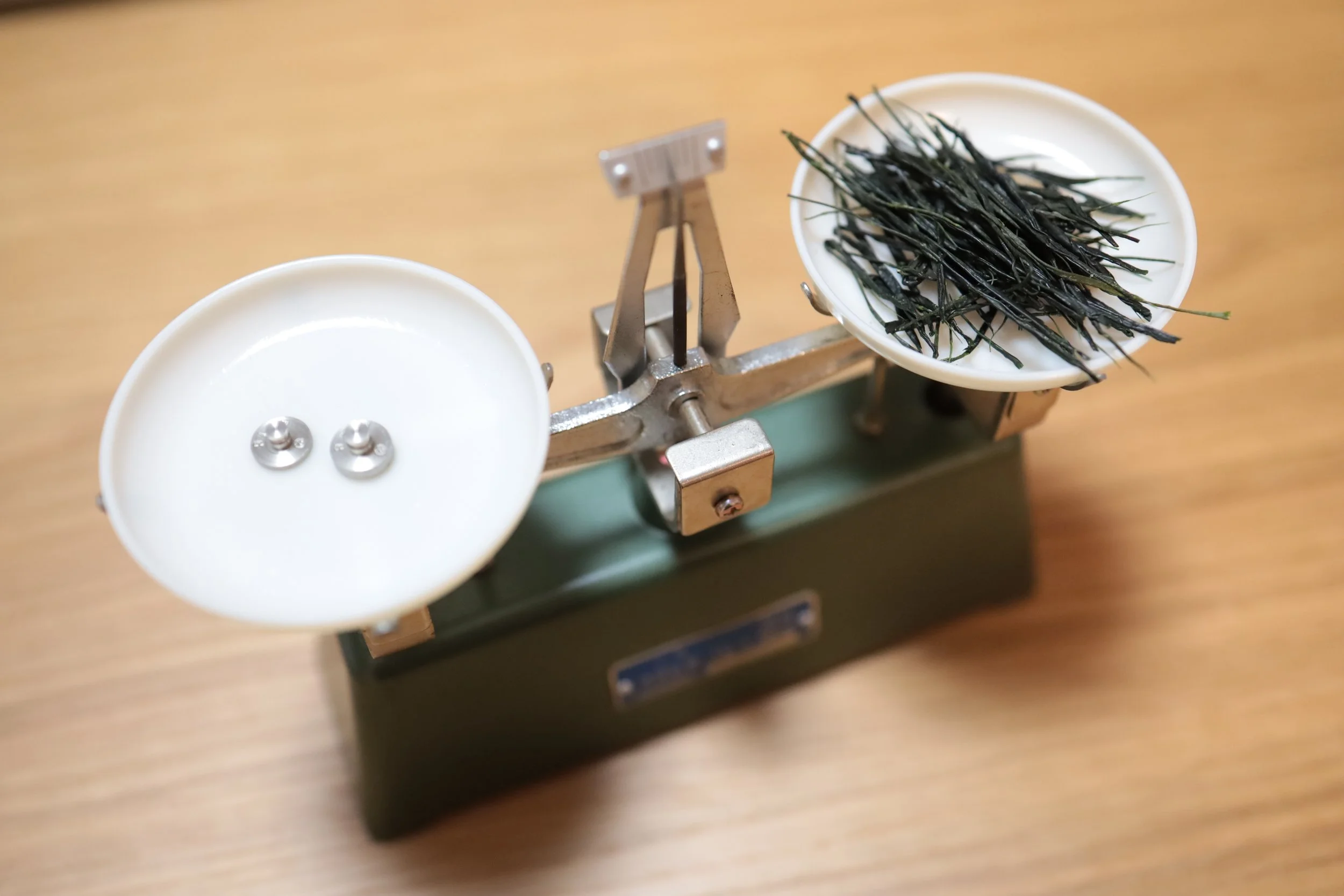
What makes his tea almost incomprehensibly precise is his approach to the leaves themselves. For his hand-rolled tea, Mr. Komuro selects only one bud and one leaf (一芯一葉, isshin ichiyō) — the very tip of the plant, shaded before harvest much like the leaves used for matcha, to concentrate amino acids and suppress bitterness. For his other teas he uses one bud and two leaves (一芯二葉), but for temomi-cha, only the finest tip will do.
He works exclusively with the Yabukita (やぶきた) cultivar — Japan's most celebrated tea variety. As Mr. Komuro himself puts it: "For hand-rolling, it must be Yabukita. Nothing matches its elegance and refinement."
The entire process involves nine separate stages — steaming, rolling, shaping, and drying — each taking more than 40 minutes. From start to finish, a single batch of hand-rolled tea takes a full day to complete.
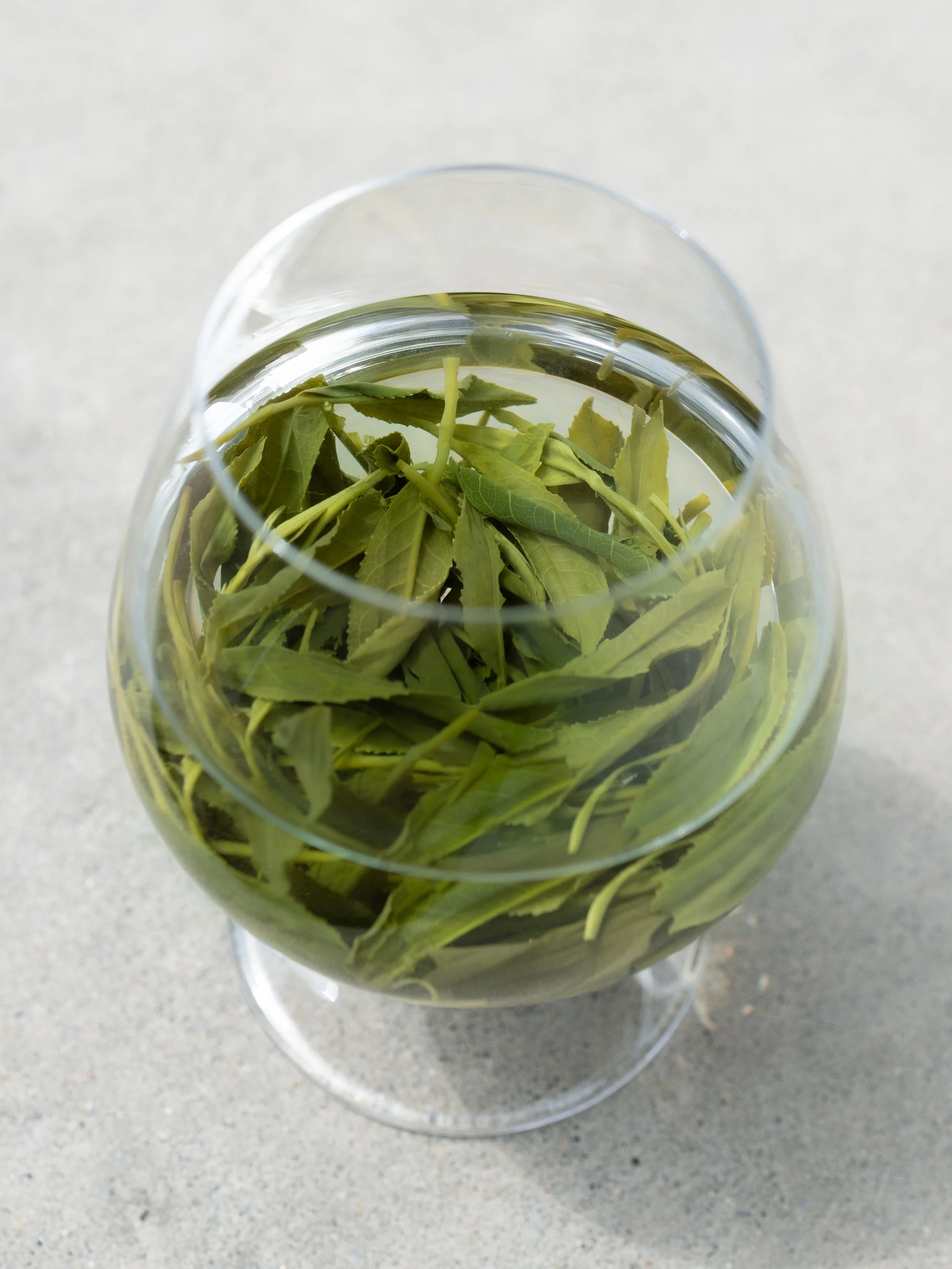
The result is almost impossible to describe without tasting it. The finished leaves are shaped into perfect needles, straight and glossy. When hot water is poured over them — and Mr. Komuro's tea can be brewed with boiling water without any bitterness whatsoever — the leaves slowly unfurl in the cup like fresh leaves coming back to life, floating gently as if just picked from the plant. The liquor itself is nearly transparent, a pale and luminous green, extraordinarily rich in amino acids, with none of the astringency or harshness found in ordinary tea.
This is what five centuries of accumulated knowledge, passed from father to son, looks and tastes like.
Can You Experience It Yourself?
Yes — and this is where things get truly special.
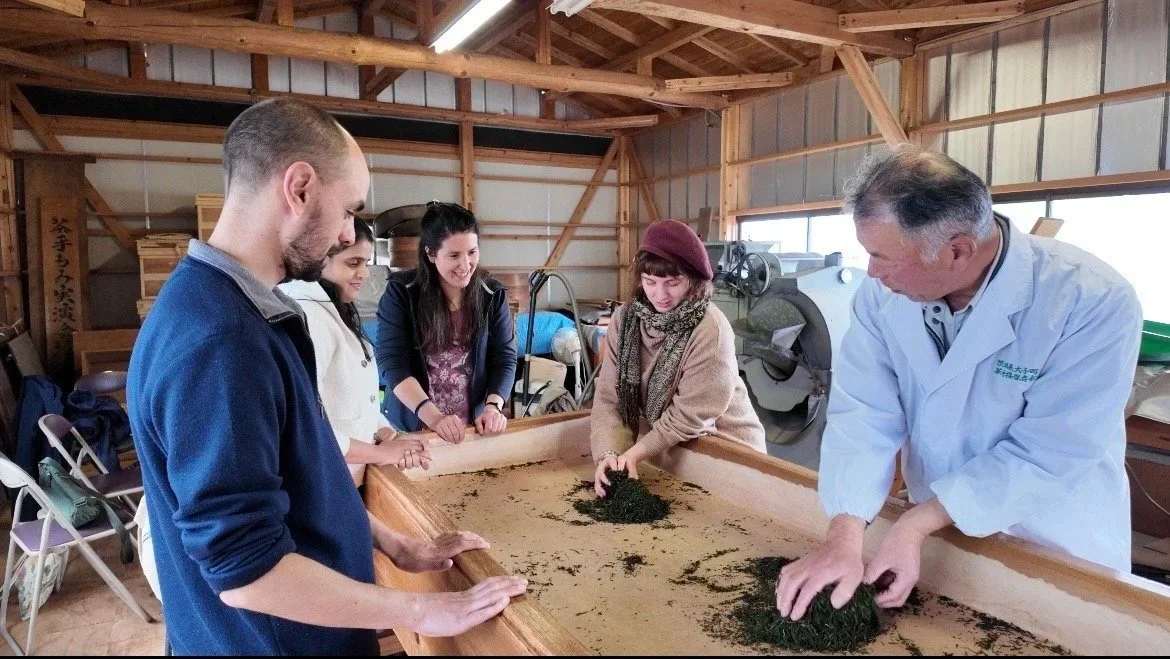
Foreign visitors learning hand-rolled tea with master Eiji Komuro in Daigo Town, Ibaraki, Japan
Through Hitamichi's cultural tours in northern Ibaraki, you can visit a local tea farmer, walk the hillside fields, and try rolling tea by hand yourself — guided by people who have dedicated their lives to this craft. It is not a performance put on for tourists. It is the real thing — the same fields, the same techniques, the same slow and careful process that has existed here for centuries.
Most visitors to Japan never make it this far north. Those who do typically come only for Fukuroda Falls (袋田の滝), one of Japan's three great waterfalls, and leave the same day. The tea fields, the farmers, the living traditions — these remain almost entirely undiscovered by the outside world.
That is exactly why they are worth seeking out. And why visiting now, while these traditions still exist, matters more than ever.
FAQ
What is Oku-Kuji tea? Oku-Kuji tea (奥久慈茶) is a rare Japanese green tea grown in the mountain town of Daigo, northern Ibaraki Prefecture. It is one of the northernmost commercially produced teas in Japan, with a history spanning over 500 years.
What does Oku-Kuji tea taste like? It has a bold, rich flavour with a strong aroma and pleasant depth. It brews a deep green colour and holds its flavour across multiple infusions — second and third brews remain full and satisfying.
What is temomi-cha (hand-rolled tea)? Temomi-cha is Japanese green tea made entirely by hand, without machines. The process involves nine stages and takes a full day to complete. In Daigo Town, this tradition is kept alive by a small group of dedicated masters including Eiji Komuro, winner of Japan's highest tea honour.
How is Oku-Kuji tea different from matcha? Both matcha and Oku-Kuji hand-rolled tea involve shading the leaves before harvest to increase amino acids and reduce bitterness. However matcha leaves are ground into powder, while Oku-Kuji temomi-cha leaves are rolled entirely by hand into needle shapes and brewed whole. The experience of watching the leaves slowly unfurl in hot water is unique to hand-rolled tea.
What is the best time of year to experience Oku-Kuji tea? The first flush harvest happens in mid-May — about a month later than Shizuoka due to the colder mountain climate. This is the most exciting time to visit as the fields are at their most vibrant. However the tea hand-rolling experience with Mr. Komuro is available year-round except in May.
How many tea farmers are left in Daigo Town? According to Mr. Kikuchi, chairman of Oku-Kuji Tea no Sato Park, fewer than 20 active tea farmers remain in the region today — down from a time when nearly every family in the community grew tea.
Can I buy Oku-Kuji tea outside Japan? It is extremely difficult to find outside Japan. Hitamichi plans to make it available to ship internationally — join our mailing list to be notified when our shop launches.
Can I try making Oku-Kuji tea by hand? Yes. Hitamichi offers a hand-rolling tea experience as part of our cultural tours in northern Ibaraki. [Contact us to book]
How do I get to Daigo Town from Tokyo? Daigo Town is approximately 2.5 to 3 hours from Tokyo. Take a limited express train on the JR Joban Line from Tokyo Station or Ueno Station to Mito Station (approximately 1 hour), then change to the JR Suigun Line and ride to Hitachi-Daigo Station. Alternatively, a highway coach bus runs directly from Tokyo and Shinjuku Station to Daigo Town — a convenient and affordable option. Bus timetables and booking here. Hitamichi also offers pickup from Nasu-Shiobara Station for all tea experience tours.
Can I visit Daigo Town as a day trip from Tokyo? Yes — Daigo Town is close enough for a day trip from Tokyo, though we recommend combining multiple experiences to make the most of the trip, or staying overnight to truly absorb the pace and beauty of rural northern Ibaraki.
Hitamichi offers small-group and educational tours in the rural north of Ibaraki Prefecture, connecting travellers directly with the people and traditions that make this region extraordinary. [Explore our tours]
About the Author
Rina Nagamatsu is the founder of Hitamichi, a cultural tourism company based in northern Ibaraki Prefecture, Japan. Born in Tokyo and raised across the UAE, Belgium, South Africa, and Japan, Rina was selected by the Ibaraki Prefectural Government to support the revitalisation of northern Ibaraki through cultural tourism. She works directly with local tea farmers, artisans, shrine priests, and sake brewers, and leads all Hitamichi tours personally in English. Learn more at hitamichi.com.