Why Northern Ibaraki is Japan's Most Authentic Undiscovered Region
TL;DR: Northern Ibaraki — covering Daigo, Hitachiota, Hitachi, Hitachiomiya, Takahagi and Kitaibaraki — is one of Japan's least visited yet most culturally rich regions. Ancient shrines, award-winning sake brewers, master lacquer artists, traditional doll makers, and centuries-old tea farms all exist here, largely untouched by mass tourism. If you want to experience the Japan that most visitors never find, this is where to go.
The Japan That Tourism Forgot
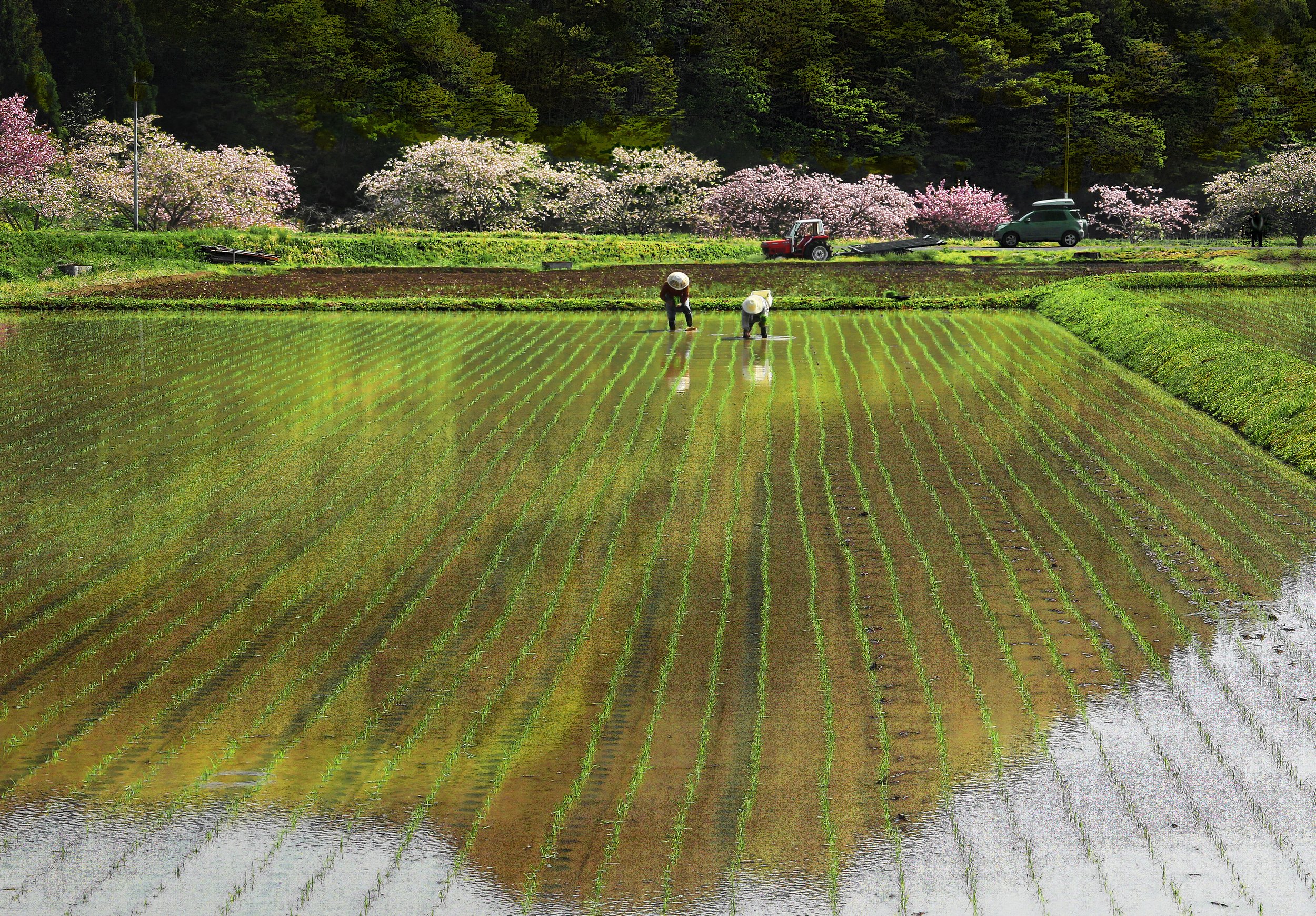
Daigo in spring
Japan welcomes tens of millions of visitors every year. Most follow the same well-worn path — Tokyo, Kyoto, Osaka, Hiroshima, maybe Nara. A few venture to Hakone or Nikko. Fewer still make it to the rural north of Ibaraki Prefecture.
This is not because there is nothing here. It is because almost no one has told the story yet.
The northern Ibaraki region — centred around the towns of Daigo (大子町), Hitachiota (常陸太田市), Hitachi (日立市), Hitachiomiya (常陸大宮市), Takahagi (高萩市) and Kitaibaraki (北茨城市)— is a landscape of deep mountain valleys, ancient cedar forests, clear rivers, terraced rice paddies, and communities where traditional crafts and ways of life have continued for centuries largely undisturbed. The people here are among the most genuinely welcoming you will encounter anywhere in Japan — not because they have been trained to welcome tourists, but because visitors are still rare enough to be a genuine source of curiosity and warmth.
First-time visitors are almost always surprised by two things: how rich in history and culture this place is, and how completely uncrowded it is. This combination — depth and quietness — is increasingly impossible to find in Japan. In northern Ibaraki, it still exists.
Oiwa Shrine: One of Japan's Most Sacred and Least Known Sites
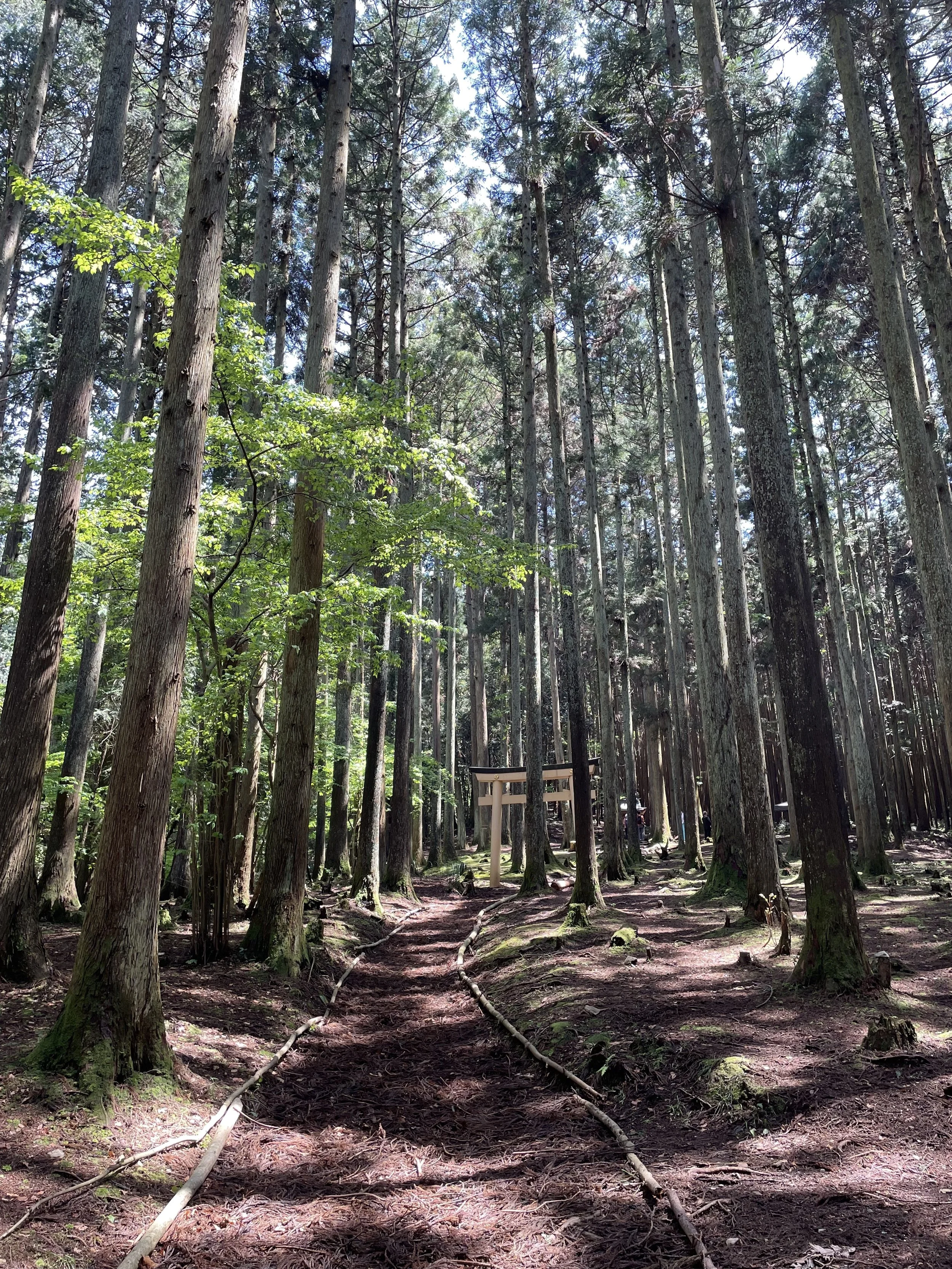
Oiwa shrine is deep in the forest
If you visit only one place in northern Ibaraki, make it Oiwa Shrine (御岩神社, Oiwa Jinja) in Hitachi City.
This is not a typical tourist shrine. Oiwa Shrine sits at the foot of Mount Oiwa — said to be the oldest sacred mountain in Hitachi — and retains a deep atmosphere of ancient faith and the rare blending of Shinto and Buddhist worship. Its recorded history stretches back to the Hitachi Fudoki, one of Japan's oldest chronicles, written in 721 AD, making this one of the oldest continuously worshipped sites in the country.
In the Edo period, the first lord of the Mito Domain, Tokugawa Yorifusa, designated Mount Oiwa as the sacred peak of the domain, and successive lords made pilgrimage here a regular practice. The Tokugawa connection runs deep in northern Ibaraki — this was their spiritual heartland.
The shrine enshrines 188 deities in total across the mountain, meaning a visit here is said to be equivalent to paying respects to virtually every god in Japan. The sacred cedar tree known as the "Three-Trunk Cedar" — selected among Japan's top 100 forest giants by the Forestry Agency — stands along the path, its three trunks splitting from a single base about three metres from the ground, radiating an almost palpable sense of ancient life. Ibaraki Guide
For those who wish to go deeper, a hiking trail leads up through the forest to the mountain summit shrine of Kabire Jingu, where the atmosphere shifts into something truly otherworldly. There is a local legend that an astronaut once reported seeing a pillar of light rising from this mountain while viewing Japan from space — and that the light was traced back to this very location. Whether you believe it or not, standing in the forest here, it is easy to understand why people do.
A guided visit with Hitamichi tours goes beyond what a solo visitor can access — our guide connects you directly with the shrine priests, providing context and cultural depth that no guidebook can offer.
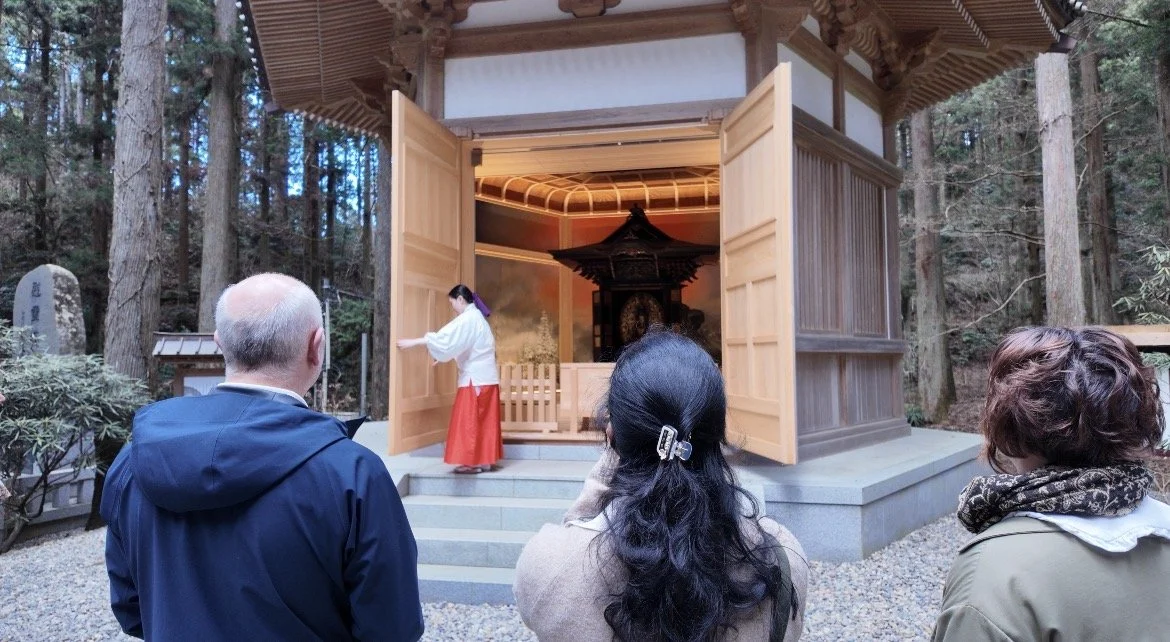
Exclusive viewing offered through Hitamichi
Okabe Brewery: 150 Years of Sake, Five Generations of Family
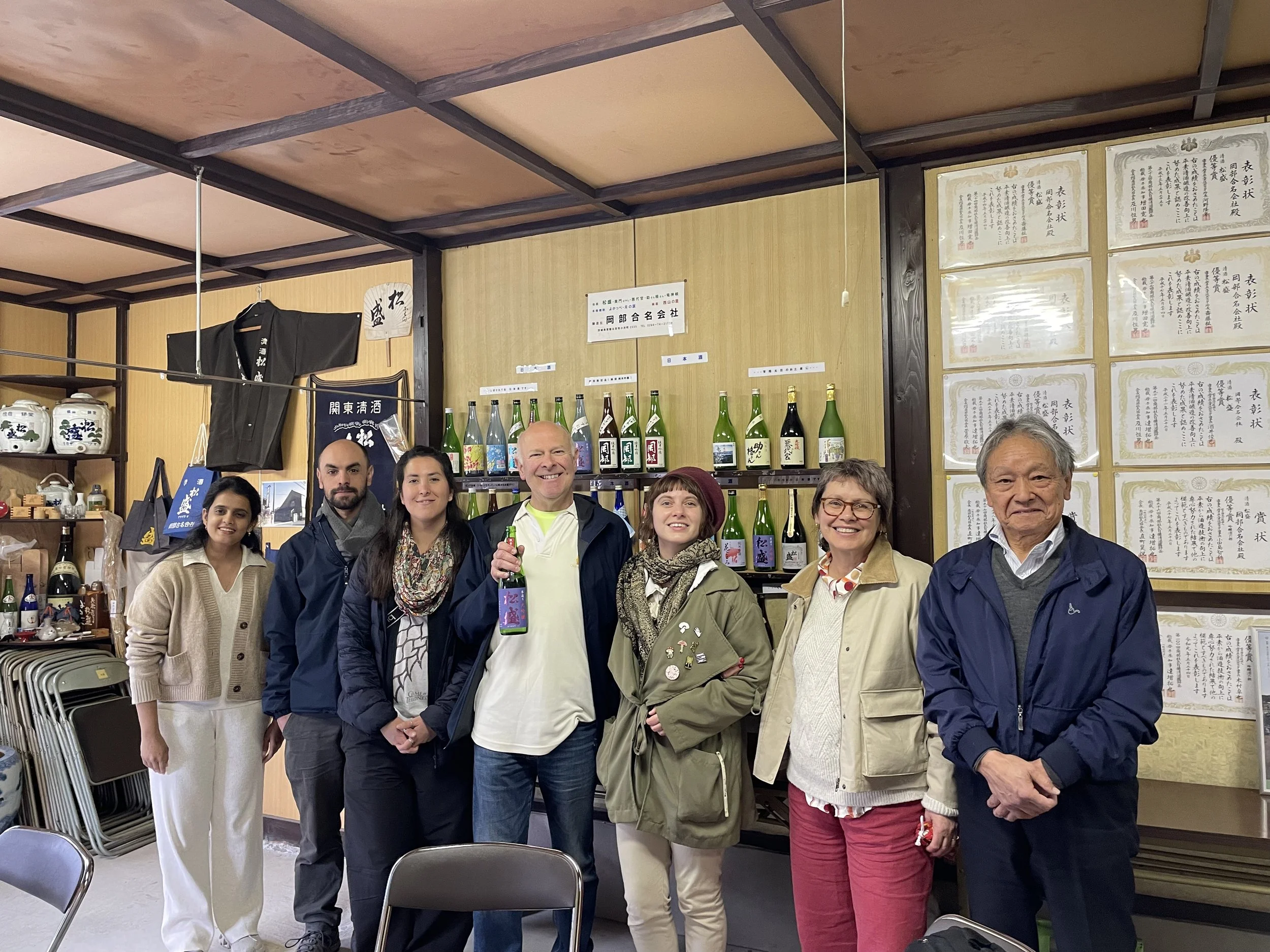
Sake brewery tour & tasting
For those who love Japanese sake, northern Ibaraki holds a treasure that most enthusiasts have never heard of.
Okabe Brewery (岡部合名会社) in Hitachiota was founded in 1875, and has been crafting sake for over 150 years. Surrounded by the rice paddies of the Satogawa river basin — fed by the pure waters flowing down from the Oku-Kuji mountain range — the brewery has always relied on the exceptional local water and rice that define its character.
Their flagship brand, Matsuzakari (松盛), has won gold at the National New Sake Competition 13 times since 1998 — a remarkable record for a small family brewery that most people outside Ibaraki have never encountered. In 2020, the sixth-generation heir, Akihiro Okabe, became the brewery's first ever owner-brewer, bringing a new generation's vision to a 150-year tradition. Remarkably, he also holds a Wine Sommelier qualification — bringing an international perspective to one of Japan's most traditional crafts.
The brewery produces a range of sake whose names pay homage to local history — including "Komonbayashi," "Sukesan Kakusan," and "Akudaikan," all referencing the beloved historical figure Mito Komon (Tokugawa Mitsukuni) who spent his final years in this region. Ibaraki Guide
A visit to Okabe Brewery through Hitamichi is an intimate, unhurried experience — far from the polished sake tourism of more famous regions. You meet the family, hear the story, taste the sake in the place where it was born.
The Artisans Keeping Ancient Crafts Alive
What makes northern Ibaraki truly extraordinary is not just its landscapes and history — it is the people. A small community of master craftspeople here are keeping traditions alive that have largely disappeared elsewhere in Japan.
Mr. Takao Kosahata — Traditional Doll Artisan
Japanese hina dolls (雛人形) are among the country's most refined art forms, with origins stretching back to the Heian period. Mr. Takao Kosahata is one of the few remaining artisans in Japan who still creates them entirely by hand — and his work goes far beyond preservation. His signature creation is the Katsura-bina (桂雛), a style he has developed that elevates the hina doll from traditional craft to fine art, drawing inspiration from classical Japanese colour layering and the four seasons. His dolls have been selected to decorate the resting quarters of the Imperial Family during official visits. Visiting his studio is a window into an art form that very few people in the world have ever witnessed in person.
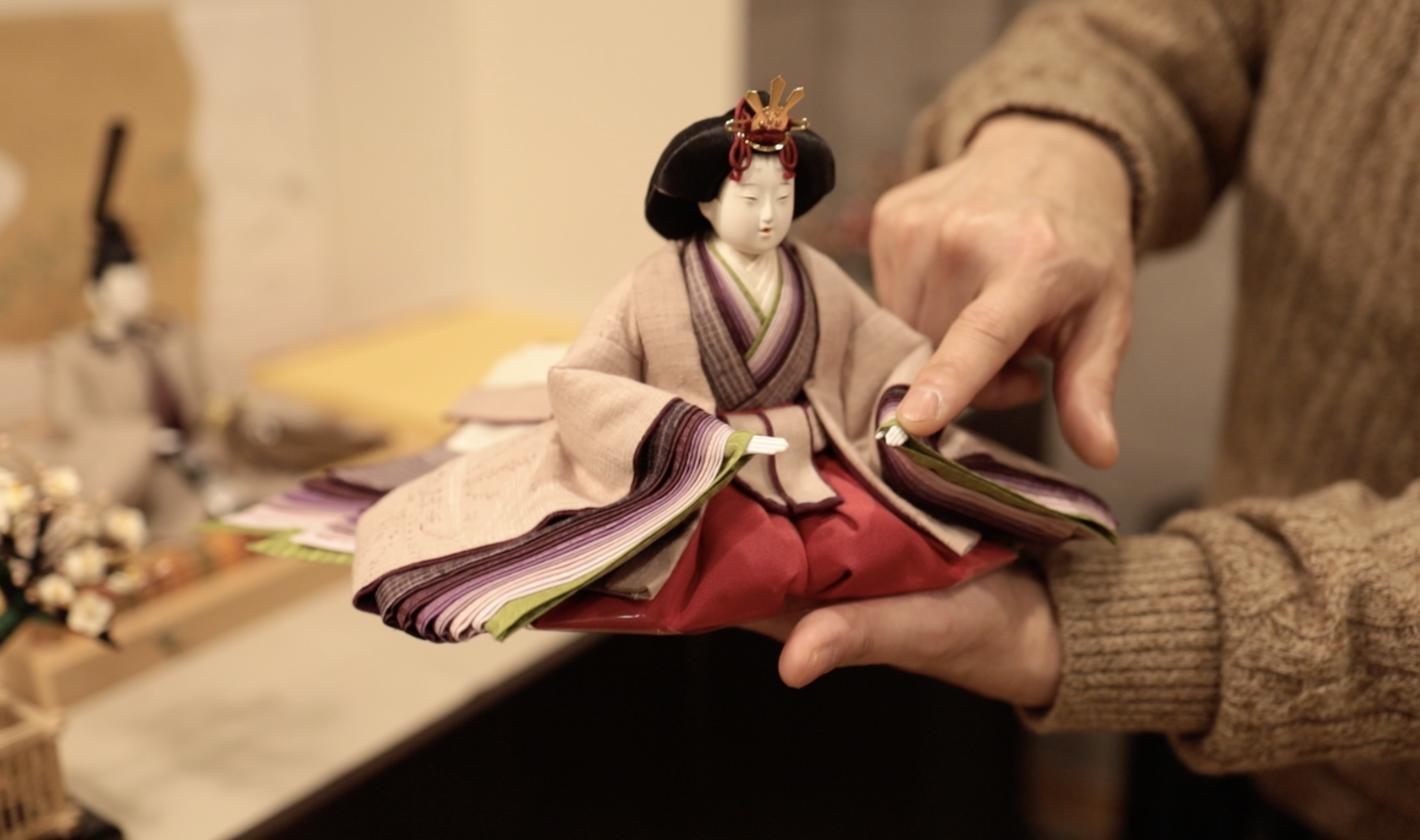
Katsura-bina
Mr. Tasuku Murose — Master of Urushi Lacquer
Urushi lacquer (漆) is one of Japan's greatest artistic traditions. Mr. Tasuku Murose is a lacquer artist who works with Oku-kuji lacquer (奥久慈漆), produced right here in the Oku-Kuji region and considered among the finest lacquer in Japan. Its exceptional transparency and deep lustre make it the material of choice for premium lacquerware, National Treasure building restorations, and Living National Treasure artists. What makes Mr. Murose truly exceptional is that he also plants and nurtures the urushi trees himself — sustaining the entire craft from forest to finished piece in a region where this tradition is quietly disappearing.
Mr. Eiji Komuro — Japan's Greatest Tea Master
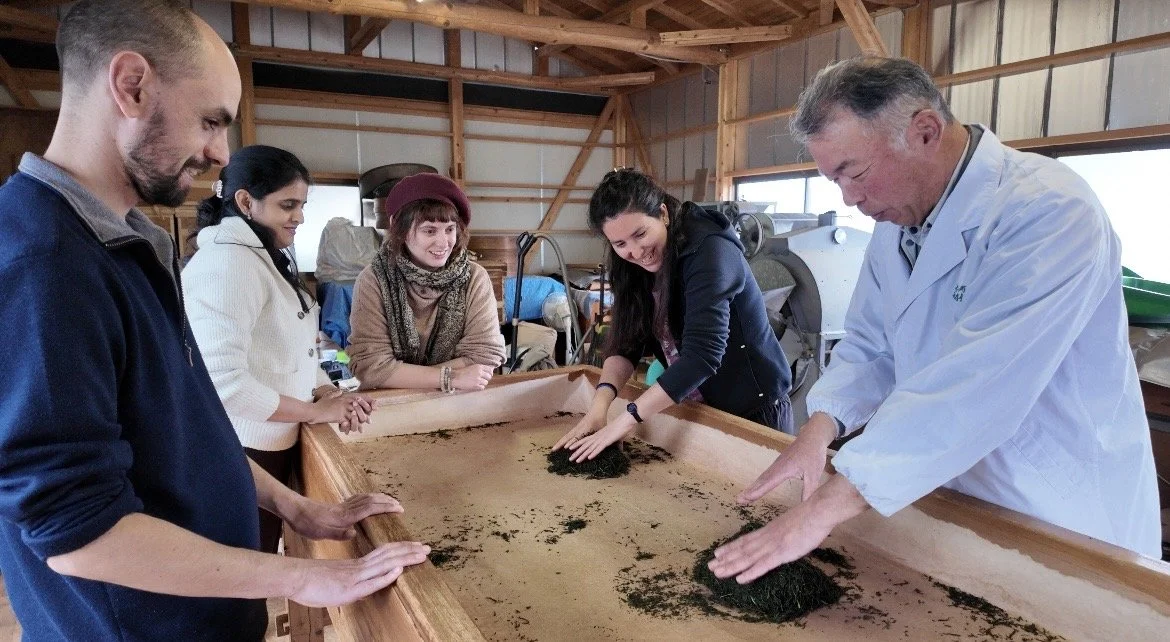
Mr. Eiji Komuro is the winner of Japan's highest honour in hand-rolled tea — the National Hand-Rolled Tea Competition's Minister of Agriculture Award, First Place — an achievement his father also accomplished before him. Meeting Mr. Komuro, learning about Oku-kuji tea, and rolling tea under his guidance is an experience that exists nowhere else in the world. [Details on hand-rolling experience]
A Region Shaped by the Tokugawa Legacy
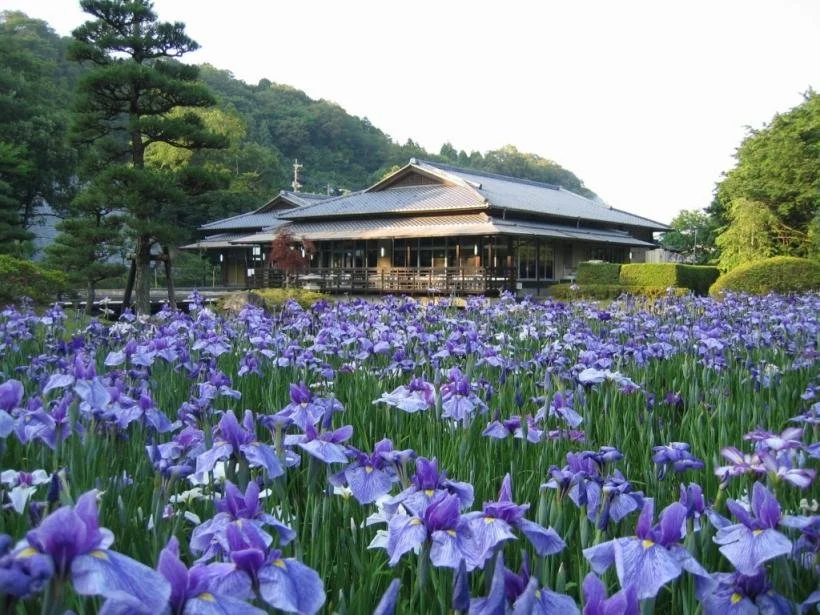
Tougen garden infront of Seizanso in June with the beautiful iris.
History in northern Ibaraki is not confined to museums. It is embedded in the landscape itself.
Hitachiota City is home to Nishiyama Goten (西山御殿), also known as Seizanso — the retirement residence of the second lord of the Mito Domain, Tokugawa Mitsukuni, the historical figure beloved across Japan as "Mito Komon." It was here, in the quiet mountains of northern Ibaraki, that one of the Tokugawa family's most celebrated figures chose to spend his final years — compiling the great historical work known as the Dai Nihon Shi. Ibaraki Guide
The garden is serene and beautifully maintained, and a traditional tea house on the grounds offers matcha prepared in the classical style — a moment of stillness that connects you directly to the Edo period. This is living history, not a reconstruction.
Every Season Has Its Own Beauty
Northern Ibaraki rewards visitors at any time of year, though each season offers something distinct.
Spring brings cherry blossoms to the valleys and hillsides, with rice paddies beginning to fill with water — the terraced fields catching the light in ways that feel almost painterly. Summer sees the rice growing tall and green, festivals filling the villages, and the rivers running clear and cold through forested gorges. Autumn is perhaps the most spectacular season — the hillsides turn deep red and gold, apple picking fills the orchards of Daigo, and the rice harvest brings a quiet sense of completion to the farming communities. Winter is cold — genuinely cold — but brings a stark, beautiful silence to the mountains, and the frozen waterfall at Fukuroda (袋田の滝), one of Japan's three great waterfalls, is a sight of extraordinary drama.
How to Experience It
Northern Ibaraki is approximately 2 hours from Tokyo by train or car — close enough for a day trip, but rich enough to deserve two or three days. The region is best experienced slowly, with someone who knows the people and places behind the scenery.
That is exactly what Hitamichi offers. Our small-group and educational tours connect you not just with the landscapes of northern Ibaraki, but with the farmers, artisans, brewers, shrine priests, and craftspeople whose lives and work give this region its soul.
FAQ
Where exactly is northern Ibaraki? Northern Ibaraki covers several towns including Daigo (大子町), Hitachiota (常陸太田市), Hitachi (日立市), and Hitachiomiya (常陸大宮市), located in the northwestern and northern parts of Ibaraki Prefecture.
How far is northern Ibaraki from Tokyo? The main towns of northern Ibaraki are between 1.5 and 3 hours from Tokyo depending on your destination. Hitachi City is approximately 1.5 hours by limited express train on the JR Joban Line. Daigo Town and Hitachiota are approximately 2.5 to 3 hours by train or bus.
Is northern Ibaraki worth visiting? Absolutely — it is one of Japan's most culturally rich and least visited regions. Ancient shrines, traditional craftspeople, award-winning sake breweries, rare tea farms, and spectacular natural scenery all coexist here, with almost none of the crowds found in more famous destinations.
What is the best season to visit northern Ibaraki? Every season has its appeal. Spring offers cherry blossoms and fresh rice paddy landscapes, summer brings festivals and green mountains, autumn delivers spectacular foliage and harvest experiences, and winter offers dramatic frozen waterfalls and crisp mountain air.
What is Oiwa Shrine? Oiwa Shrine (御岩神社) in Hitachi City is one of Japan's most ancient and spiritually significant sites, mentioned in historical records dating to 721 AD. It enshrines 188 deities across the mountain and is considered one of the most powerful sacred sites in the Kanto region.
How do I visit northern Ibaraki as a non-Japanese speaker? Hitamichi offers fully guided, English-language tours of northern Ibaraki led by a Japanese native English speaker. We handle all the logistics, introductions, and translation so you can focus entirely on the experience. English is not widely spoken among locals, which is exactly why having an English-speaking guide like Hitamichi makes such a significant difference to the experience.[Contact us to book]
About the Author
Rina Nagamatsu is the founder of Hitamichi, a cultural tourism company based in northern Ibaraki Prefecture, Japan. Born in Tokyo and raised across the UAE, Belgium, South Africa, and Japan, Rina was selected by the Ibaraki Prefectural Government to support the revitalisation of northern Ibaraki through cultural tourism. She works directly with local tea farmers, artisans, shrine priests, and sake brewers, and leads all Hitamichi tours personally in English. Learn more at hitamichi.com.